"We went bowling — it was a great evening." You hear that line every year. Yet three months later, nobody can say what that bowling night actually changed for the team. It was enjoyable. But was it team building?
What is a treasure hunt?
A treasure hunt (also known as a scavenger hunt) is a group game in which teams complete challenges, solve riddles and find their way through the city — and without good communication, they simply won't win. Unlike individual competitions it is a purely team-based format: if the team doesn't share information and split the work, its chances drop dramatically.
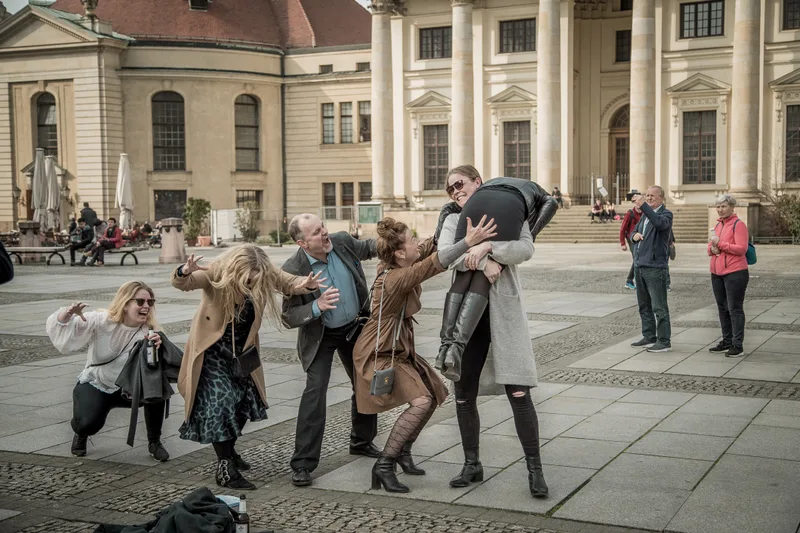
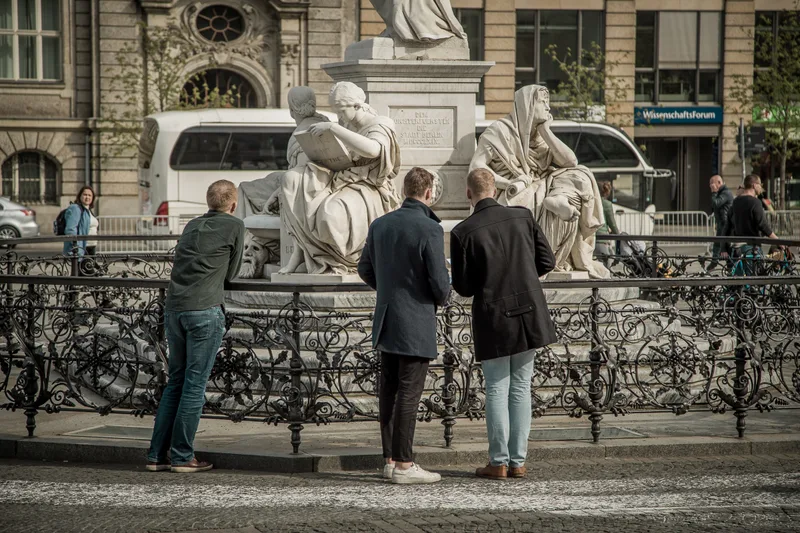
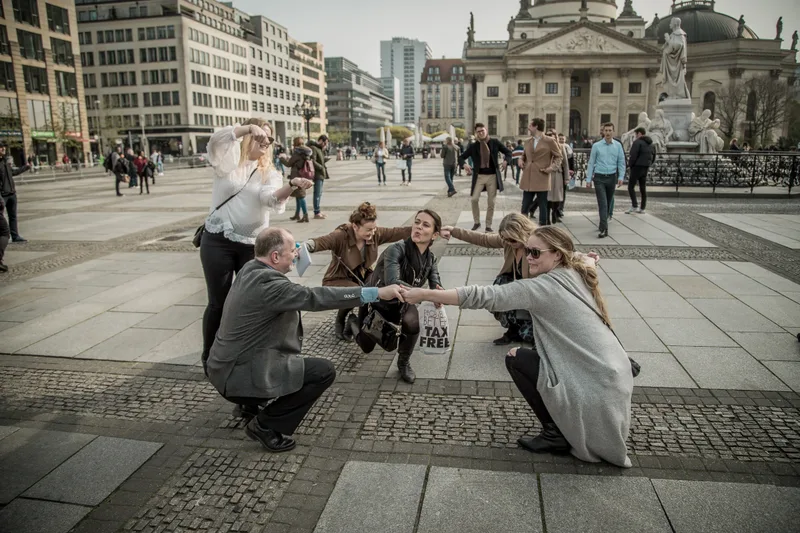
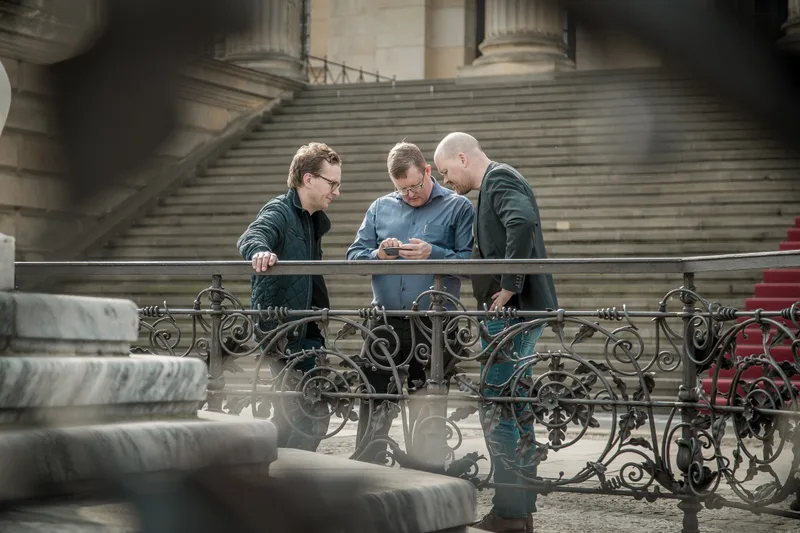
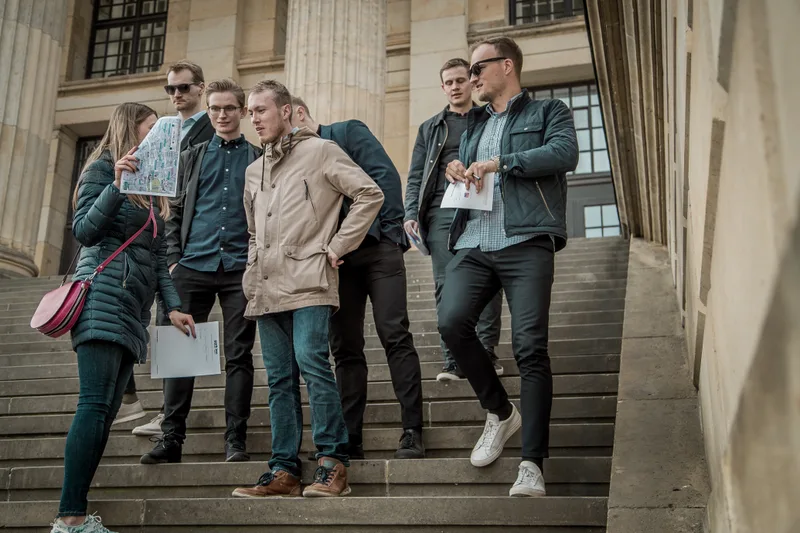
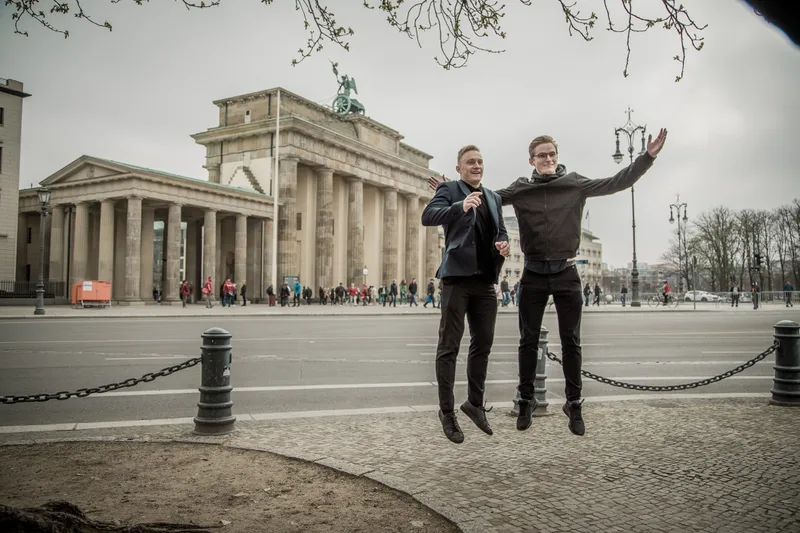
On our treasure hunt in Berlin, teams explore the historic centre of Mitte — the Brandenburg Gate, Unter den Linden, Gendarmenmarkt, Checkpoint Charlie or Museum Island — answering questions about the places around them, decoding clues and completing photo tasks while competing for the best score. A Game Master runs the whole event, keeps it fair and keeps the energy high.
What psychology says about team building
Strong team bonds don't come from passive entertainment — they form when people overcome a challenge together. In a study published in Psychological Science, strangers who went through a demanding task together felt more bonded and cooperated more afterwards than people who did an easy version of the same task (Bastian, Jetten & Ferris, 2014). A shared challenge, not shared fun alone, is what glues a group together.
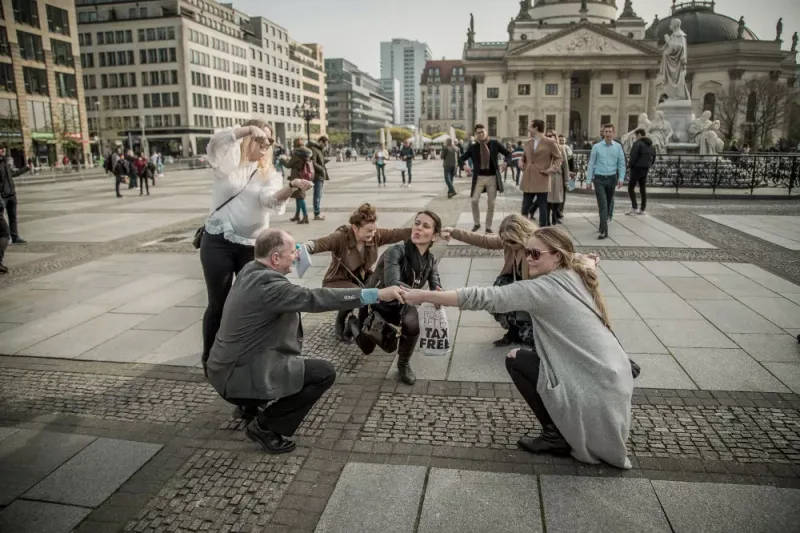
The second factor is the environment. In the office, people are held back by hierarchy and formal roles. Google’s Project Aristotle, a study of 180 teams, found that psychological safety — the feeling that everyone can speak up and try ideas without fear — matters more for team effectiveness than who is on the team. Outdoors, in a setting that is new or at least unusual for everyone, those barriers fall away naturally. The head of department and the new intern are suddenly just two people trying to work out which of the twin churches on Gendarmenmarkt is the French one.
The third factor is interdependence. Psychologists have long known that people put in less effort when their individual contribution does not matter to the result — the so-called social loafing effect (Latané, Williams & Harkins, 1979). Good team building makes every person’s contribution count.
Why bowling falls short
Bowling falls short as team building because its structure requires neither group communication nor shared decisions — everyone plays their own game. Players sit in a row, take turns, and each score belongs to one person. Interaction happens at best in a high-five after a strike.
Bar nights and office parties have a similar problem. They are pleasant, but people drift into existing friend groups and newer or quieter colleagues stay on the margins. Nothing pushes anyone out of their comfort zone. Other popular options sit in between: an escape room demands real teamwork but only for 2–6 people per room, while indoor karting is exciting but, like bowling, largely individual.
5 reasons a treasure hunt works better
A treasure hunt works better because its structure actively forces collaboration — at a bowling alley or a party, communication only happens by chance.
| Criterion | Bowling | Office party | Escape room | Karting | Treasure hunt |
|---|---|---|---|---|---|
| Active collaboration across the whole team | ✗ | ✗ | ✓ | ✗ | ✓ |
| Communication required by the structure | ✗ | partially | ✓ | ✗ | ✓ |
| Everyone active at the same time | ✗ | ✓ | ✓ | ✗ | ✓ |
| Everyone finds a role | ✗ | partially | partially | ✗ | ✓ |
| Breaks down hierarchy | ✗ | ✗ | partially | ✗ | ✓ |
| Works for 50+ people | many lanes | ✓ | many rooms | in heats | ✓ |
| Memorable experience | moderate | moderate | moderate | moderate | high |
| Skills transferable to the workplace | ✗ | ✗ | ✓ | ✗ | ✓ |
- It demands real collaboration. Without sharing information the team won't finish the tasks in time. Every member has to contribute.
- Everyone finds a role. One navigates, one decodes, one takes the photos, one keeps an eye on the clock. All roles are essential — and they often surprise people.
- The environment levels the playing field. In the streets of Berlin there is no boss and no subordinate, just a team trying to complete a mission.
- The challenge is shared. When the team finally cracks a tricky clue, everyone feels it at the same moment. That moment is the foundation of team cohesion.
- The experience is memorable. A photo task in front of the Brandenburg Gate or a riddle at Checkpoint Charlie is something colleagues still tell new hires about a year later.
What it looks like in practice
Treasure Hunt Berlin takes 2–3 hours — from the introduction through the hunt to the award ceremony — with no dead time in between.
We usually meet at Pariser Platz by the Brandenburg Gate, or at your hotel or office. The Game Master explains the rules, splits the group into teams and hands out the game kits. Then the teams set off through Mitte, answering questions about the monuments, solving riddles and completing photo tasks. At the end everyone meets again — often at a restaurant — where the answers are scored and the winners receive diplomas and prizes.
No queuing, no waiting for your turn. The energy stays high the whole time. Want to see the details? Read how the event works step by step, or see our guide to choosing the right activity for your team.